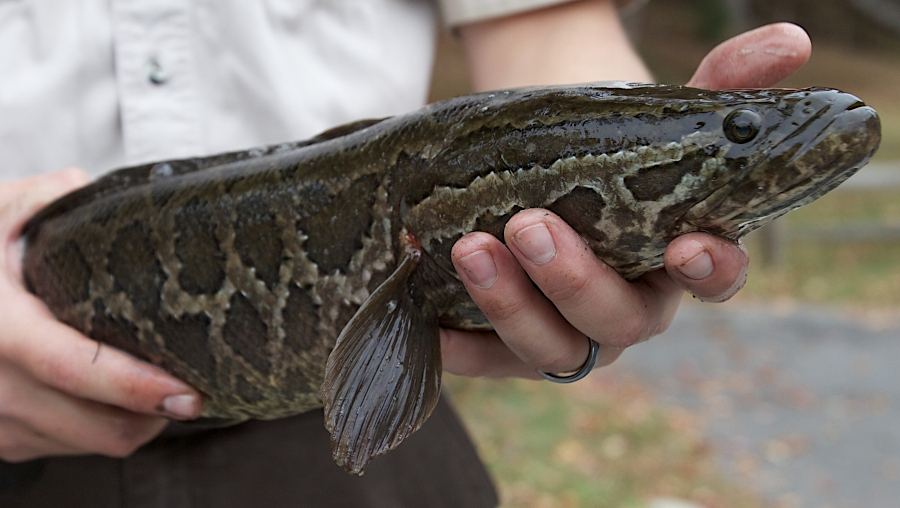
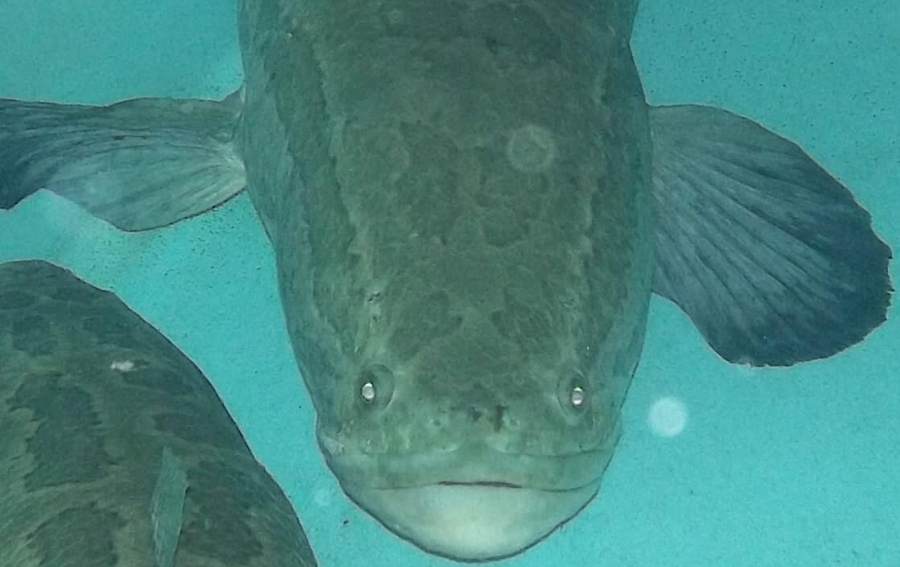
snakeheads were named due to the snakelike patterns on their skin
Source: US Fish and Wildlife Service, An invasive snakehead; US Geological Survey, Northern snakehead fish
snakeheads were named due to the snakelike patterns on their skin
Source: US Fish and Wildlife Service, An invasive snakehead; US Geological Survey, Northern snakehead fish
The Northern Snakehead (Channa argus) is a freshwater fish that is native to Korea and adjacent parts of Russia and China, particularly the Amur River watershed. The Channidae family began to migrate out of its site of origin in the south Himalayan region about 18 million years ago. Snakeheads reached East Asia between 4-8 million years ago.
It can live in stagnant shallow water where oxygen levels are low, breathing air in places where other fish cannot thrive. Though most common in fresh water, snakeheads can also pass through brackish water with salinity reaching as high as 15-18 ppt (parts per thousand). Some snakehead species can migrate overland, and Northern Snakehead adults can survive up to four days out of the water.
They are ambush predators that:1
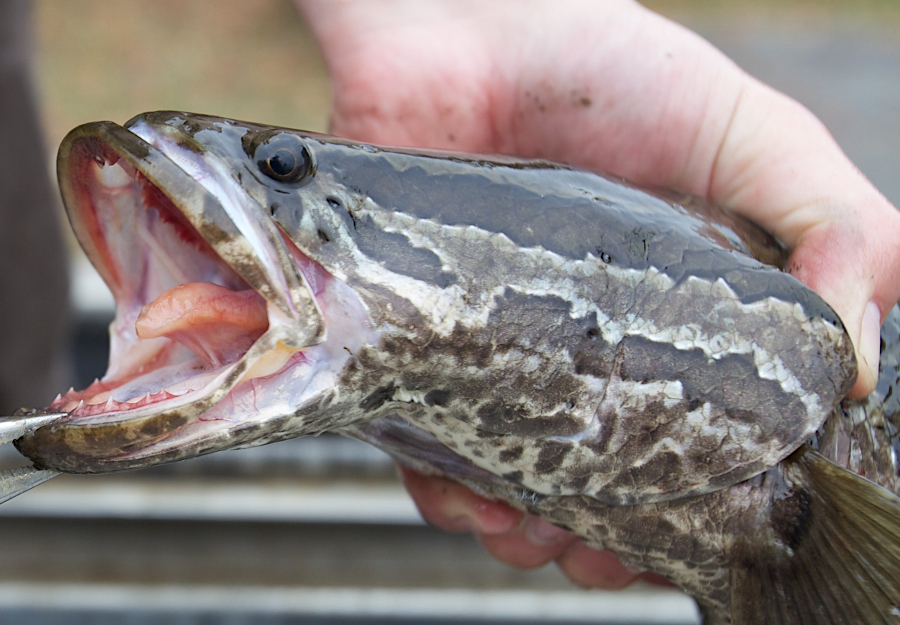
snakeheads are ambush predators, with teeth
Source: US Fish and Wildlife Service, Snakehead Teeth
Snakeheads were brought to the United States for the live food fish market, and were popular in ethnic markets and restaurants. They were released intentionally by people who no longer wanted to keep them in an aquarium tank at home. Some were placed into local streams through ritual animal releases by immigrants from East Asia, and others by anglers who wanted to establish a recreational fishing opportunity.
They are now one of almost 1,400 nonindigenous aquatic species in the United States, including channel catfish, carp, and descendants of pet goldfish released into the Potomac River watershed. The first discovery of snakeheads in the wild in the continental United States was in 1997, in a Southern California lake. The first discovery near Virginia was in late June, 2002 at a pond in Crofton, Maryland.
The Vietnamese owner of a store in Falls Church suggested the cultural context for that release:2
What is now called Walking Fish Pond is next to the Little Patuxent River, a tributary of the Chesapeake Bay. Wildlife officials immediately sought to eradicate it, recognizing its healthy appetite for native species.
The snakeheads in the pond were eradicated using rotenone. The biologists discovered many juvenile snakeheads. The presumption was that only a few adults had been introduced, but breeding had been very successful.
The ability of snakeheads to "walk" to nearby streams was highlighted in the media, highlighting public concern about a invasion by "frankenfish." By 2006, snakeheads were the centerpiece in three horror films.
Source: Wild Waters, The Invasion of America’s Most Hated Predator: Snakehead Fish
As described by fisheries biologists:3
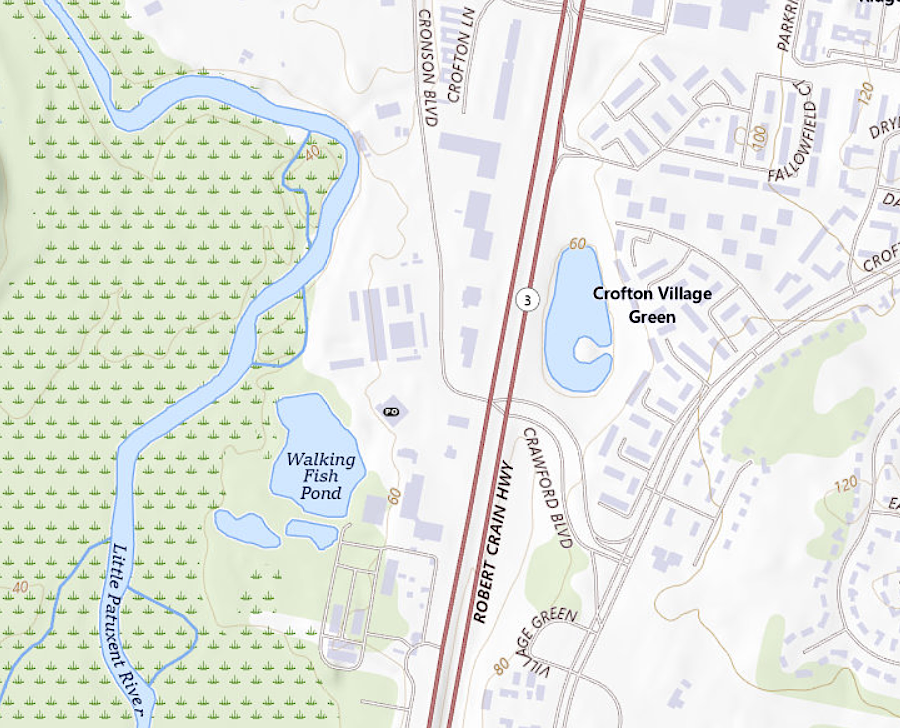
the site behind the post office in Crofton, Maryland, where snakeheads were found in 2002, is now called "Walking Fish Pond"
Source: ESRI, ArcGIS Online
In 2002 the US Fish and Wildlife Service added the entire Channidae family, including the Northern Snakehead, to its "Injurious Wildlife" list.4
Eradication of populations found in other streams was not sufficient. Through other introductions by humans, the species became established in the Potomac River watershed:5
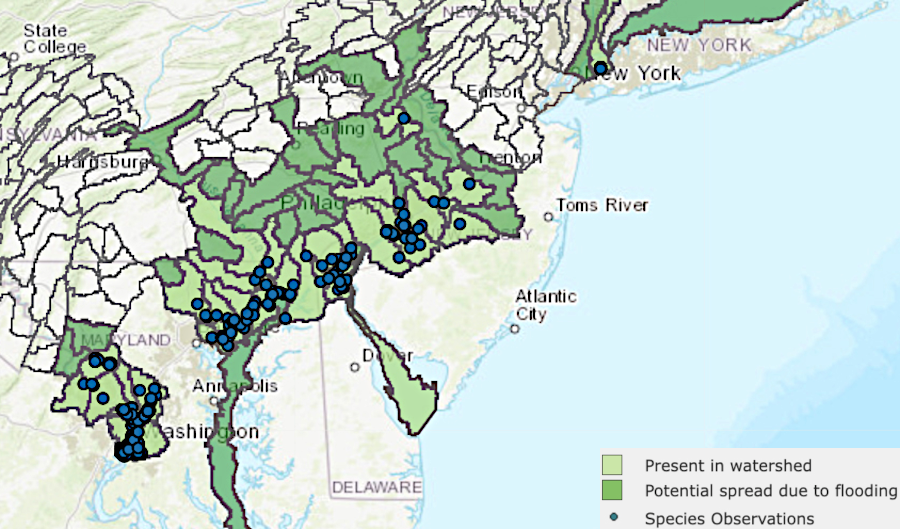
a surge of freshwater after Hurricane Ida in 2021 probably helped snakeheads move to new streams
Source: US Geological Survey, Flood and Storm Tracker map of Northern Snakeheads
Snakeheads reached Virginia in 2004 and soon became common in tidal waters of Potomac River tributaries down to Colonial Beach. Biologists feared their spread, but could not eradicate snakefish from the Potomac River the way they had eliminated the fish from the pond in Crofton:6
DNA testing revealed that the snakeheads found in the Potomac River were not related to the fish in the pond at Crofton. The initial eradication had been successful, but further spread had been facilitated through intentional releases. Anglers who wanted the high-energy experience of catching snakeheads, using kayaks in shallow waters, were thought to have been at least partially responsible.
Biologists kept documenting the spread of the invasive fish species:7

snakehead fish expanded their known range between 2004-2015, reaching the Rappahannock River
Source: Virginia Department of Game and Inland Fisheries, Mapping Where Snakehead Fish Are Found in Virginia
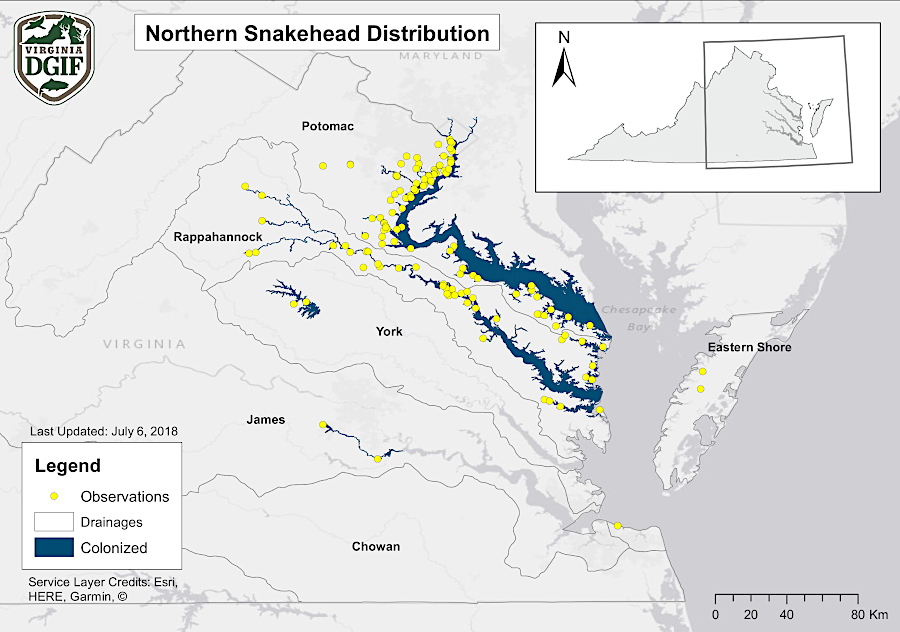
by 2018, snakeheads had been found in the James River and as far south as Hampton Roads
Source: Virginia Department of Wildlife Resources, Northern Snakehead Distribution (2018)
Wildlife official feared hungry snakeheads would devastate the native fish populations particularly largemouth bass (Micropterus salmoides). Anglers were encouraged to catch the invasive species, and to kill rather than return any fish to the stream. The goal was to prevent a hyperabundant population explosion, as occurred in the Mississippi River after the introduction of Silver Carp (Hypophthalmichthys molitrix). Wildlife managers also sponsored seafood marketing initiatives to support commercial harvest.
Source: National Geographic, Invasion of the Snakeheads!
In Northern Virginia streams, the population peaked in the mid-2010s. The combination of fishing pressure and ecological constraints limited the impact of the new species. Birds learned to eat snakeheads, while smaller fish learned how to evade them.
By 2026, the snakehead population in the Potomac River tributaries had stabilized. Natural reproduction in streams south of Neabsco Creek appears to provide a new population for streams with fresher water further upstream; 80-90% of the snakeheads found in Four Mile Run and near the Pentagon did not originate there.
The difference in reproductive success may be due to "urban stream syndrome." Upstream of Neabsco Creek, Northern Virginia streams have a more flashy hydrology and water quality has been lowered by pollutants in urban stormwater runoff. Spawning and nursery habitats are better downstream of Neabsco Creek.8
Source: Virginia Department of Wildlife Resources, Snakehead Fish in Virginia
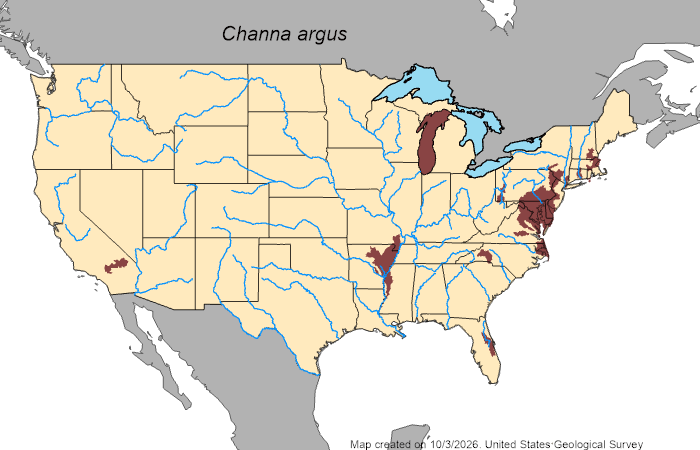
by 2026, introduced snakeheads had been found in multiple watersheds in the continental United States
Source: US Geological Survey (USGS), Channa argus (Cantor, 1842)
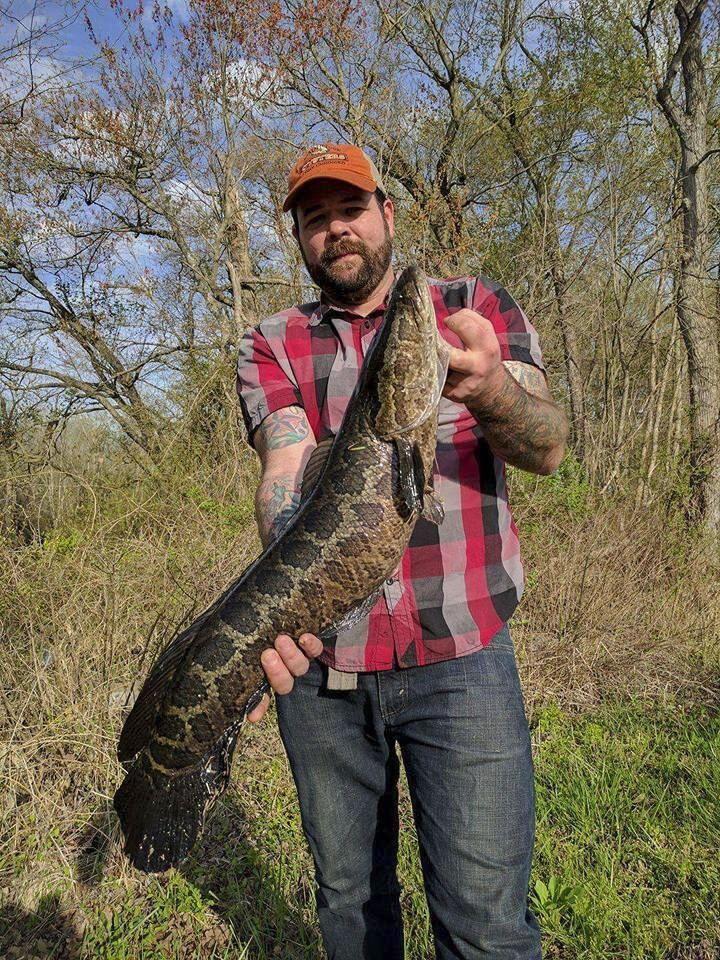
anglers appreciate the fighting response of snakeheads that swallow a lure, as well as the taste of the firm flesh
Source: US Geological Survey, Invasive northern snakehead fish
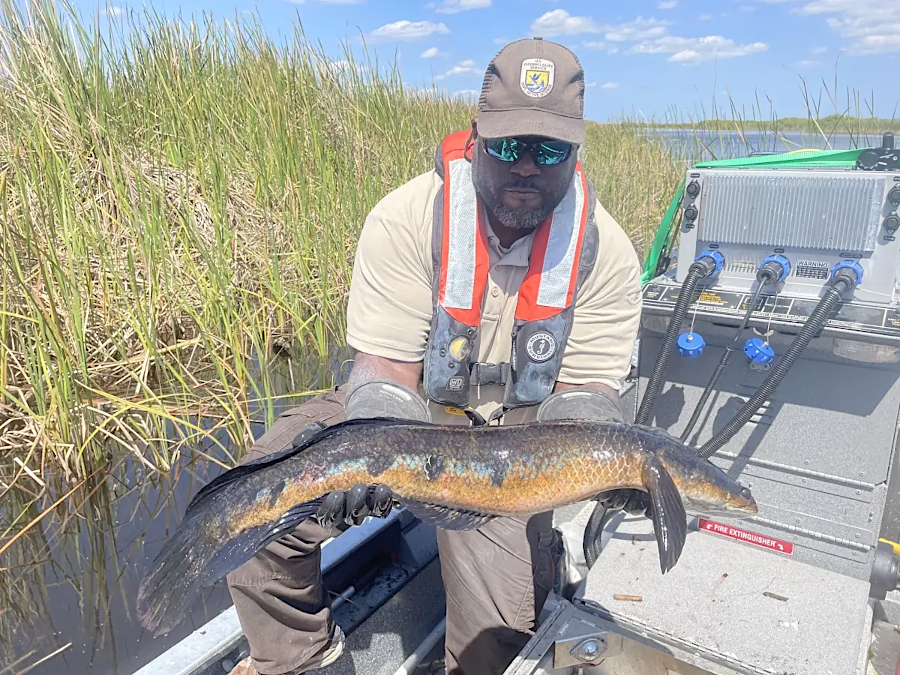
other species of snakeheads have been introduced and are reproducing in Florida
Source: US Fish and Wildlife Service, Peninsular Florida FWCO Fish Biologist Cedric Doolittle holding a non-native goldline snakehead captured during electrofishing surveys at ARM Loxahatchee NWR