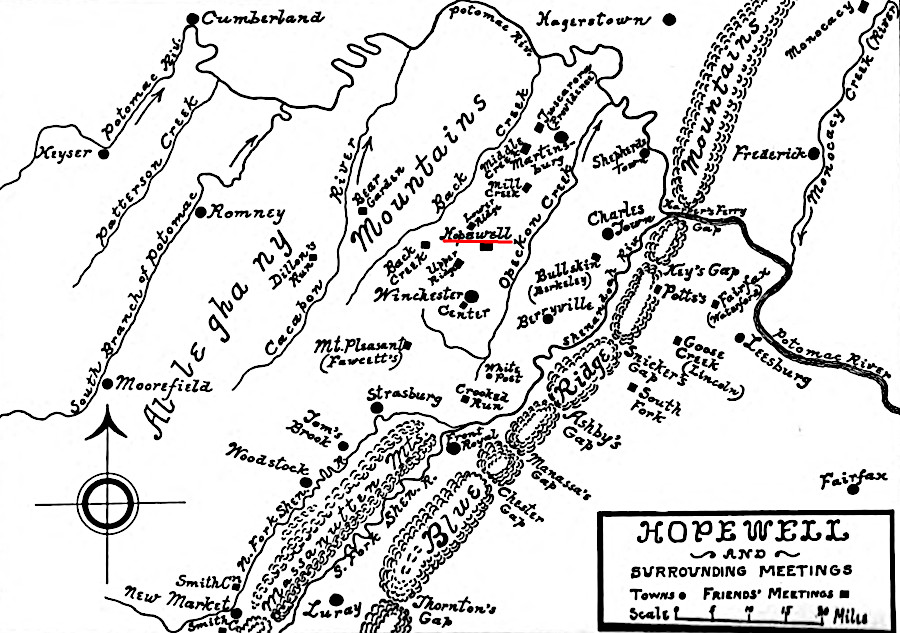
Alexander Ross donated land within his grant for the Hopewell Meeting House
Source: John W. Wayland and Hopewell Friends, Hopewell Friends history, 1734-1934, Frederick County, Virginia (p.38)
Alexander Ross donated land within his grant for the Hopewell Meeting House
Source: John W. Wayland and Hopewell Friends, Hopewell Friends history, 1734-1934, Frederick County, Virginia (p.38)
Morgan Bryan was an immigrant from Ireland who lived in Pennsylvania in the 1720's. His trading with the Native Americans living west of the Susquehanna River apparently stimulated his awareness and interest in the land of Virginia west of the Blue Ridge.
Bryan visited the lower Shenandoah Valley (near the Potomac River) with Alexander Ross in 1729. They applied in October 1730 to Governor Gooch for a land grant between Opequon Creek, the Shenandoah River, and the Potomac ("Cohongaruton") River:1
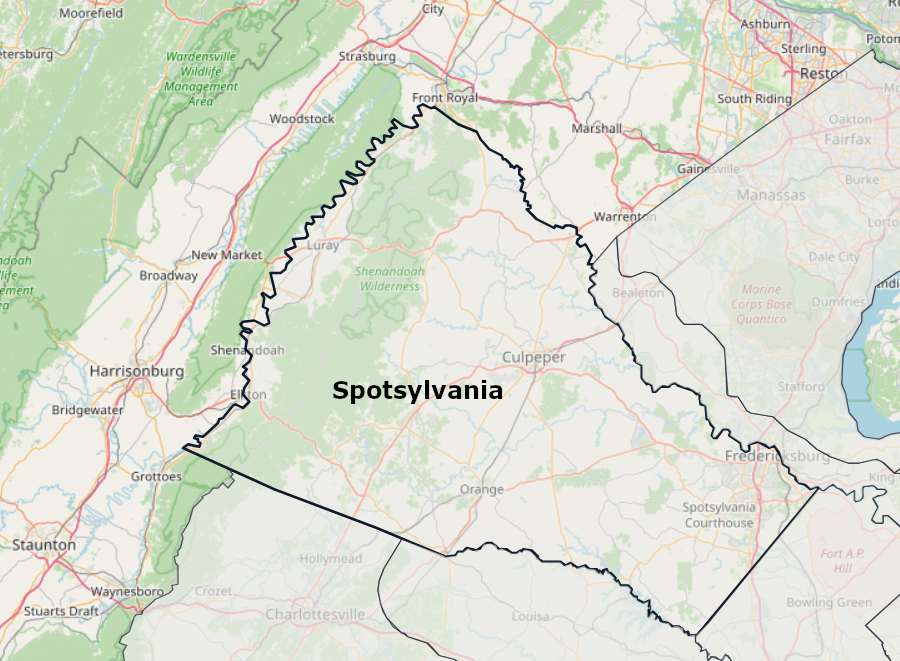
in 1730, Ross and Bryan applied for land that was west of any organized county in Virginia
Source: Newberry Library, Atlas of Historical County Boundaries
The Governor's Council awarded them 100,000 acres if they could get 100 settlers to move to that area within two years. In 1732 Ross and Morgan applied for an additional 20,000 acres.
Bryan lived in the Shenandoah Valley until 1748, when he started on a journey to North Carolina to acquire lands near the Virginia border that were controlled by Lord Granville. Bryan arrived in 1749, when he was 78 years old. He continued to speculate and acquire land, amassing several thousand acres in North Carolina near the Yadkin River before dying at the age of 92.
Bryan's granddaughter Rebecca married Daniel Boone. The Moravians chose to move to lands east of the "Bryan settlements," where they built the towns of Bethabara and Salem (modern Winston-Salem).2
Ross and Morgan recruited 70 families. Many were Quakers in Pennsylvania who saw political control of the colony shifting to non-Quakers who did not share their religious beliefs. Agressive acquisition of lands from the Delaware and other Native American tribes was triggering a violent response, but the Quakers did not support funding a militia and military expeditions for punishment.
On November 12, 1735, Governor Gooch signed patents awarding land to Alexander and Ross. Colonial officials in Williamsburg were aware that Lord Fairfax claimed the same land near the mouth of the Shenandoah River, citing his inheritance of a proprietary grant first issued by King Charles II. Starting in 1728 Robert Carter, land agent for Lord Fairfax, entered a caveat to challenge colonial grants.
When Abraham Hollingsworth acquired title to 532 acres in 1732 at the site of Abraham's Delight from Bryan and Ross, he later had to negotiate with Lord Fairfax to retain his ownership. The stone house built on that property in 1754 is now the oldest structure in Winchester.
Alexander Ross was a Quaker. He dedicated land for the Hopewell Meeting House and chose to live nearby. The name "Hopewell" came from a place near Lancaster in Pennsylvania, from which some of the early settlers had left for lands near Opequon Creek. Others came from Elk River in Maryland.
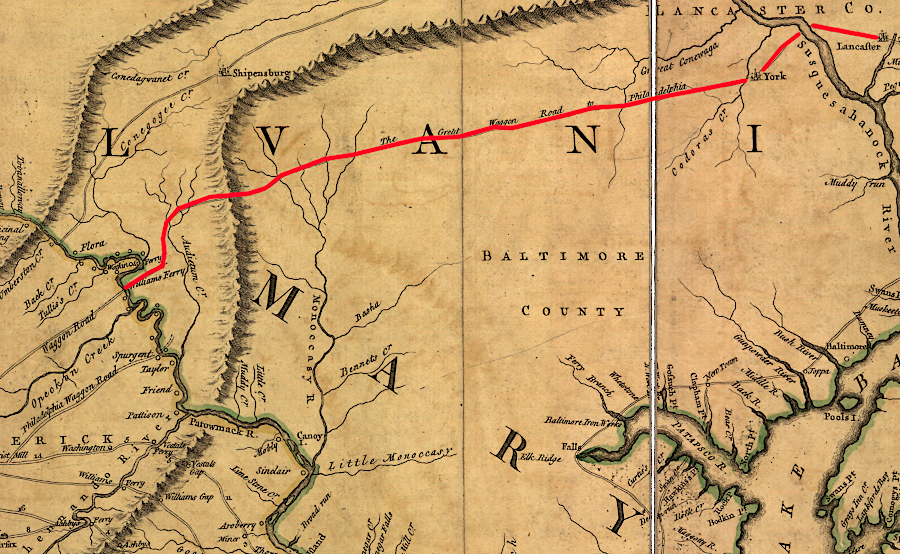
steady migration from the Lancaster area led to development of the Great Wagon Road into the Shenandoah Valley
Source: Library of Congress, A map of the most inhabited part of Virginia (by Joshua Fry and Peter Jefferson, 1755)
Bryan appears to have been a Presbyterian, though he briefly joined a Quaker meeting.3
When Governor Gooch and his council were first asked by Ross and Morgan for 100,000 acres west of the Blue Ridge, the land there was not organized as part of any county in the colony. As population increased, the boundaries of Orange County were extended west and encompassed all of Virginia's claims west of the Blue Ridge. The grant was located within Orange County between 1735-1738. Frederick County was authorized in 1738, but not formally organized until 1743. By then, the population had increased sufficently for local taxes to cover the cost of creating a county court and other local officials.4
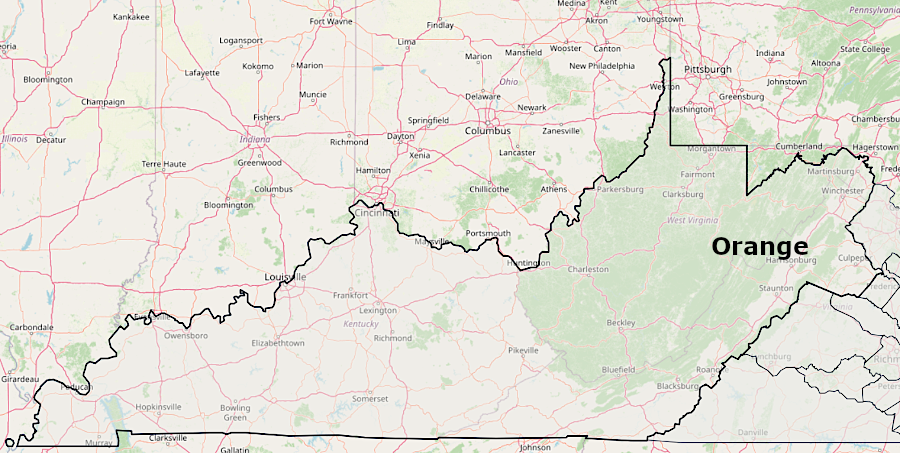
when Ross and Bryan were formally awarded their grant in 1735, the land was within the boundaries of Orange County
Source: Newberry Library, Atlas of Historical County Boundaries